Halloween 2026 falls on Saturday, October 31, and it is the front end of the tightest lighting stretch of the year. Diwali follows eight days later on November 8, and Thanksgiving is November 26.
Three occasions inside eight weeks means the real decision is not whether to light the house for Halloween. It is which of three systems you buy: fixed color seasonal from about $799 per install, a color changing RGBW C9 seasonal install from about $1,400 that covers Halloween through Christmas from a single install, or a permanent system from about $3,000 that never comes down.
The short version
Halloween 2026 is Saturday, October 31. A Saturday means longer trick or treating and heavier foot traffic on the block than a midweek Halloween.
Diwali is eight days later on November 8, and Christmas installs start days after that. One October install can serve all three.
The color changing option is the one that solves all three from a single October visit: orange and purple on the 31st, warm white for Diwali on the 8th, red and green in December, then one takedown at the end of the season.
Book by the end of September. October is the busiest install month of the year in Chicagoland, and it fills first.
When Is Halloween 2026, and When Should the Lights Go Up?
Halloween 2026 is Saturday, October 31. A Saturday Halloween matters more than people expect: trick or treating runs longer, foot traffic on the block is heavier, and the house is on display to more neighbors than a Tuesday Halloween ever is.
| Date | Occasion | What it means for lighting |
|---|---|---|
| Saturday, October 31 | Halloween | Lights must be up and tested by the 30th |
| Sunday, November 8 | Diwali, Lakshmi Puja | Eight days after Halloween |
| Thursday, November 26 | Thanksgiving | Christmas installs are finishing by now |
| Friday, December 25 | Christmas | Peak display season |
Book by the end of September for Halloween. Chicagoland lighting crews are scheduling October installs through August and September, and October fills first because it is the only month that serves Halloween, Diwali and the start of the Christmas season. Waiting until mid October means taking whatever date is left, if any.
Why Does the Eight Day Gap to Diwali Change the Math?
Halloween is October 31 and Diwali is November 8, so there are eight days between them, and Christmas installs begin days after that. Three things follow from that, and together they are the whole argument for buying one install instead of three.
For a permanent system there is no scheduling problem at all. Every occasion is a scene change in the app, on the same hardware, with no crew coming back.
Does Permanent Lighting Make Sense Just for Halloween?
Not on its own. A permanent roofline system runs about $3,000 for a typical Chicagoland home, and against the color changing seasonal install you would realistically buy instead it pays for itself in a little over two years. The full payback table, run against all three seasonal tiers, is on our Diwali lighting guide.
The comparison that matters is against the color changing install rather than the fixed color one, because nobody who wants orange on the 31st and warm white on the eighth is buying a single fixed scheme in the first place.
Halloween is still not the reason to go permanent. It is the occasion that makes the case obvious, because it is the one most people skip when paying per install, and the one that costs nothing extra once the hardware is on the house.
What Colors Work for Halloween Lighting?
Orange and purple are the pairing that reads as Halloween from the street. Orange alone reads as autumn or harvest. Purple alone reads as a party. Together they are unmistakable.
On both the permanent system and the RGBW C9 seasonal install these are scenes rather than bulbs, so you can run warm white through October, switch to orange and purple for Halloween week, and be back to warm white for Diwali on November 8 without anyone on a ladder.
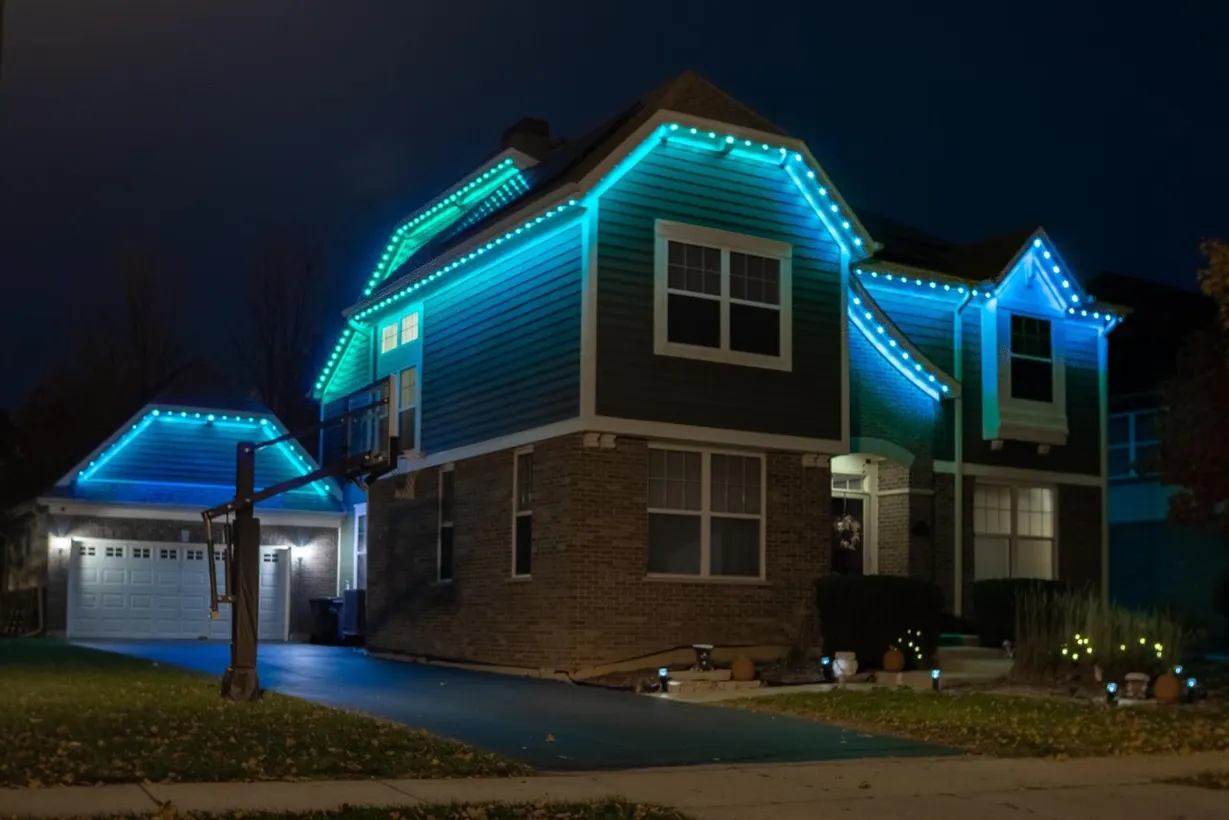
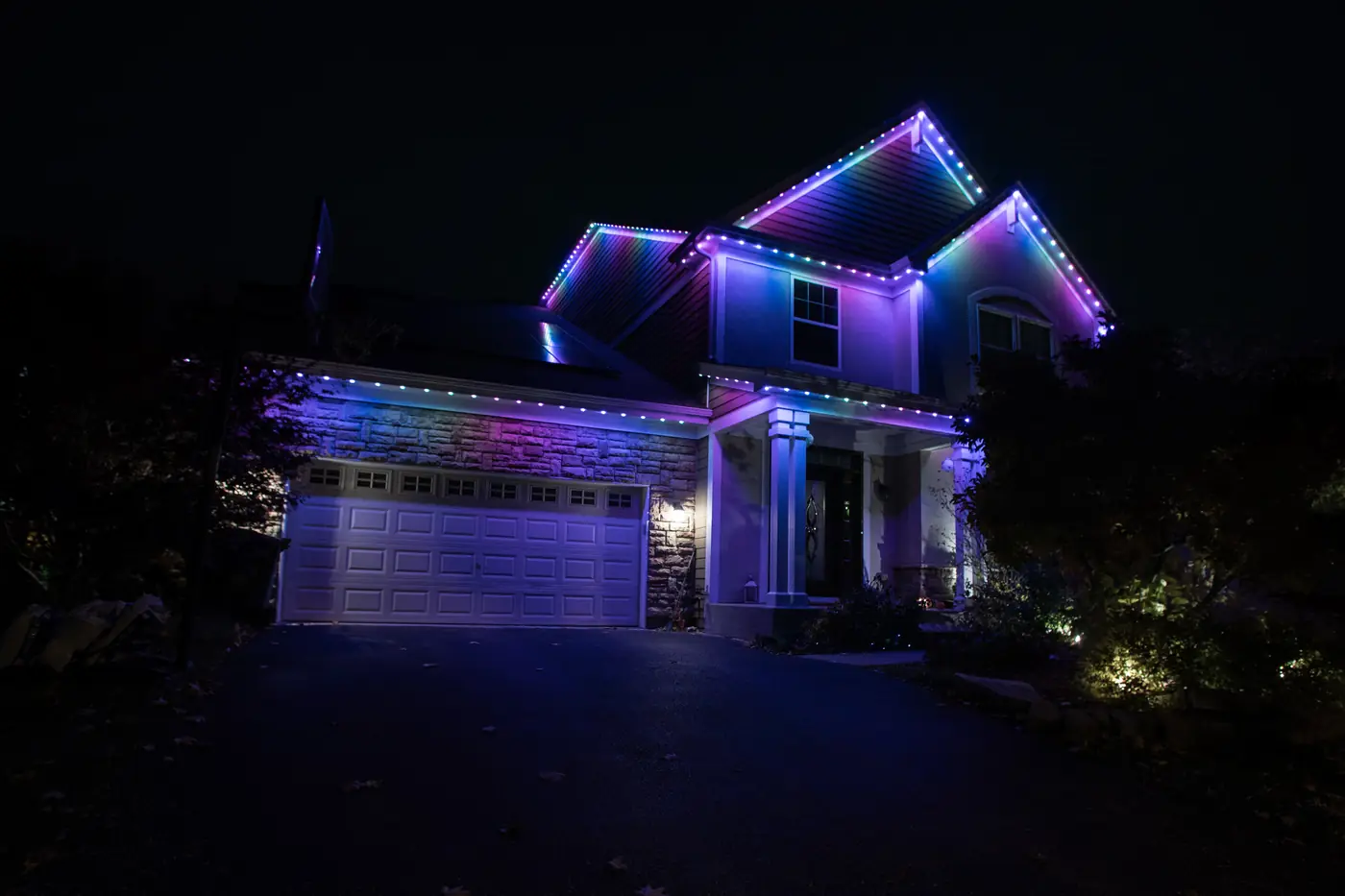
One roofline, any color, changed from the app rather than from a ladder.
What to Light for Halloween Besides the Roofline
The roofline is the frame. Halloween is the one occasion we light for where the yard is the actual show, so the job of the architecture is to sit behind it and not argue.
Which Option Is Right for Your House?
| Fixed color seasonal | RGBW C9 seasonal | Permanent | |
|---|---|---|---|
| Typical price | About $799 and up per install | About $1,400 and up for Halloween through Christmas | About $3,000, once |
| Recolors per holiday | No, one scheme for the season | Yes | Yes |
| Orange and purple for Halloween | Yes, if that is your scheme | Yes | Yes |
| Warm white for Diwali, eight days later | Not without a second install | Yes, same install | Yes |
| Red and green for Christmas | Not without a second install | Yes, same install | Yes |
| Warranty | Full season, animal damage included | Full season, animal damage included | Ten years on components |
| In season service | Included | Included | Included |
| Takedown | Included at season end | Included at season end | Never, it stays |
| Cost next year | About $799 again | About $1,400 again | Nothing |
All three figures are typical starting points for an average Chicagoland home, not quotes. We price the job rather than a rate per foot, so roofline complexity, height and safe access move them as much as size does. What the seasonal number covers, and what moves it up or down, is broken down in our Chicagoland lighting cost guide.
A Saturday Halloween Moves the Deadline
Halloween 2026 lands on a Saturday, and that changes the working schedule more than it changes the display.
None of that is about the lights themselves. It is about having the install done early enough that the 31st is a night you watch rather than a night you work, which is the same reason our cost guide tells people to book in August.
Frequently Asked Questions
Lighting for Diwali as well? See our guide to Diwali light installation in Chicagoland, including the 2026 dates and the Lakshmi Puja timing. We install across Chicagoland, including Palatine, Barrington and Arlington Heights.
Professional Permanent lighting
Ready to Transform Your Home's Exterior?
Get a free, no-pressure quote from Hanging Lights Club.
START MY PERMANENT LIGHTING