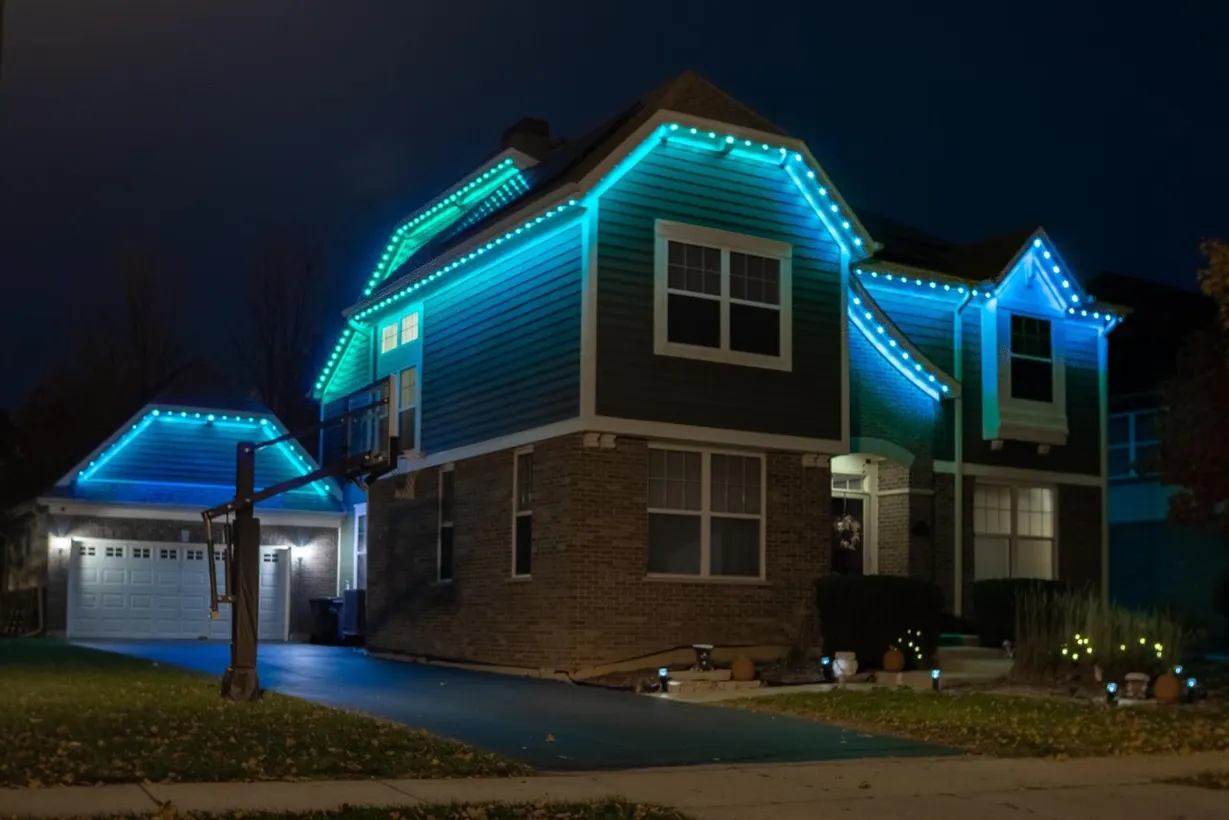
Every permanent lighting company tells you the same thing: during the day, you won’t even know it’s there.
That is close to true. It isn’t quite true. Here are real daylight photos from our own installs, and an honest account of where you will notice it.
The short version
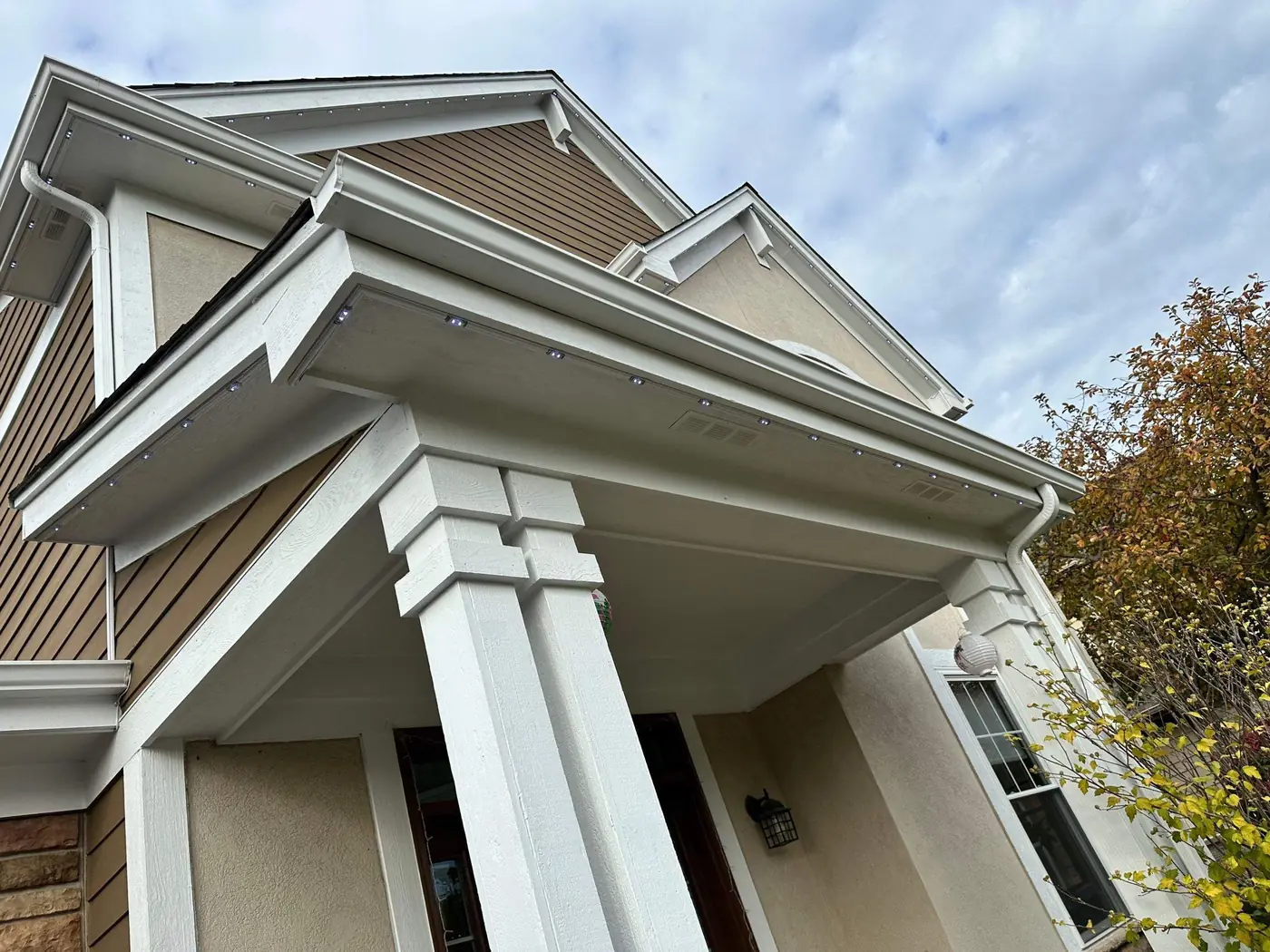
In daylight you see a thin channel tucked into the roof edge with a row of small lenses in it. From the street, most people never register it. Standing under the eave, you will.
The hardware is small. Minleon’s data sheet lists the light at 2 by 0.875 by 0.5 inches, so two of its three dimensions are smaller than a quarter (RGBW+ 4-LED Pebble data sheet, November 2023).
How it looks in daylight comes down to the install, not the brand: track color, a straight line, and how it’s fastened.
If you’re under an HOA, you almost always need approval before it goes up (Mulcahy Law Firm, October 2025).
The Short Answer: A Thin Line You Stop Noticing
From the sidewalk, a well-installed system reads as part of the trim. There’s a slim channel following the fascia and the gable edges, and if it matches the trim color, your eye files it as one more piece of the roof edge.
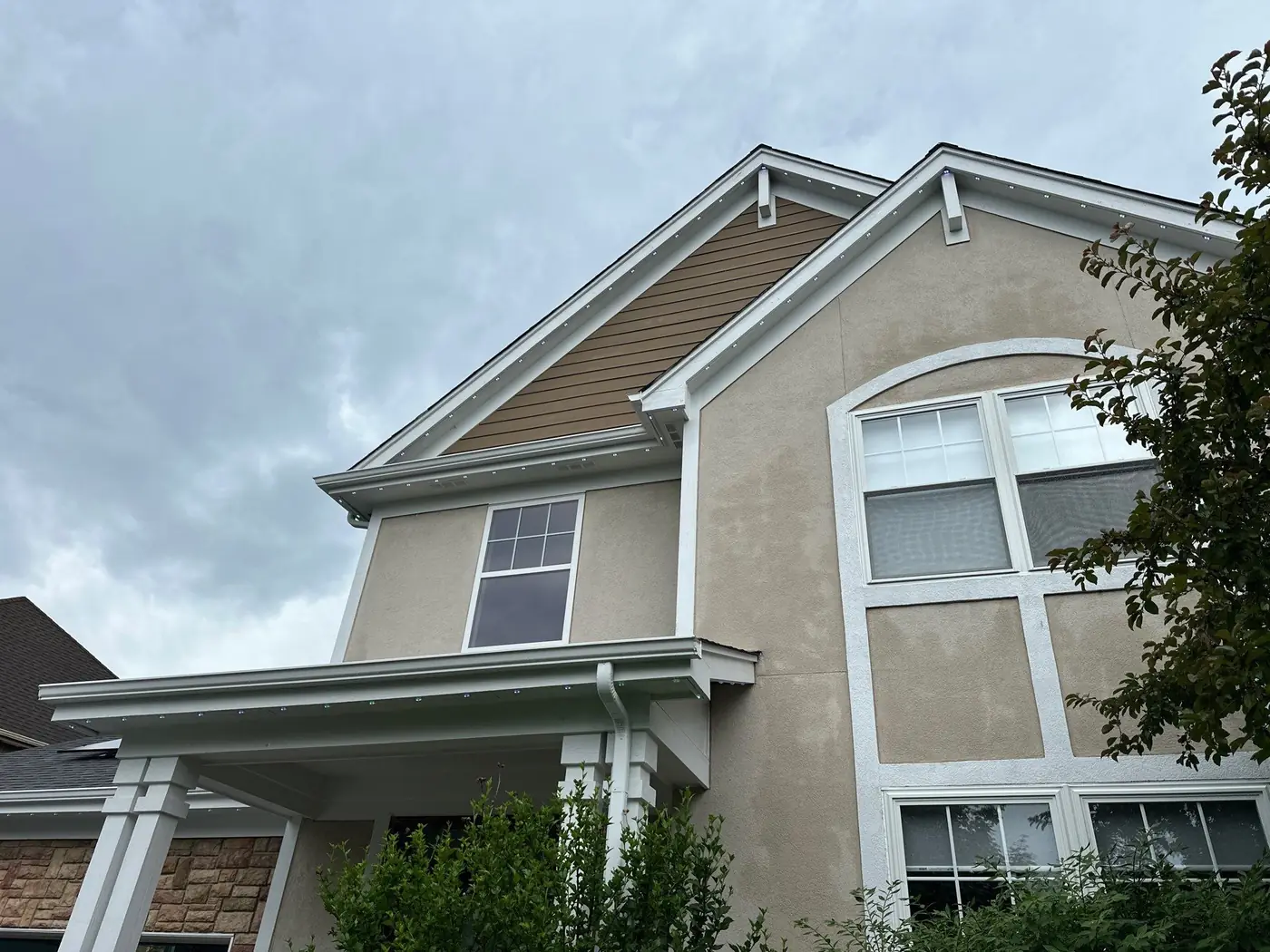
The track runs along every roofline in this photo. Most people see white trim.
The honest version of the sales pitch isn’t “invisible.” It’s “unobtrusive.” Invisible means you can’t find it. Unobtrusive means you stop looking for it after the first week, and nobody who wasn’t told brings it up.
How Big Is It, Really?
Smaller than most people picture. We install Minleon, and their published data sheet puts each light at 2 by 0.875 by 0.5 inches, weighing about a quarter of an ounce (RGBW+ 4-LED Pebble data sheet, revised November 2023). A US quarter is 0.955 inches across, so two of those three dimensions are smaller than the coin.
The channel they sit in is the other half of the answer. Minleon’s track comes in black, white, brown, gray, and sand (P50 track product page). Five colors isn’t infinite, but it covers most Chicagoland trim well enough that the channel disappears into the line. For how the systems differ from each other, start with our permanent lighting buyer’s guide.
Where You Will Notice It
This is the part most articles skip. There are four places the hardware shows, and you should know all four before you sign.
Taken from a front porch, looking straight up into the channel. This is the closest a guest normally gets.
What you won’t see on a job done properly is loose wire, sagging runs, or a line that wanders away from the fascia. That’s workmanship, and it’s permanent in a way the brochure doesn’t mention.
What Actually Makes It Disappear
Four decisions, all made on install day, all yours to ask about. None of them are brand-specific.
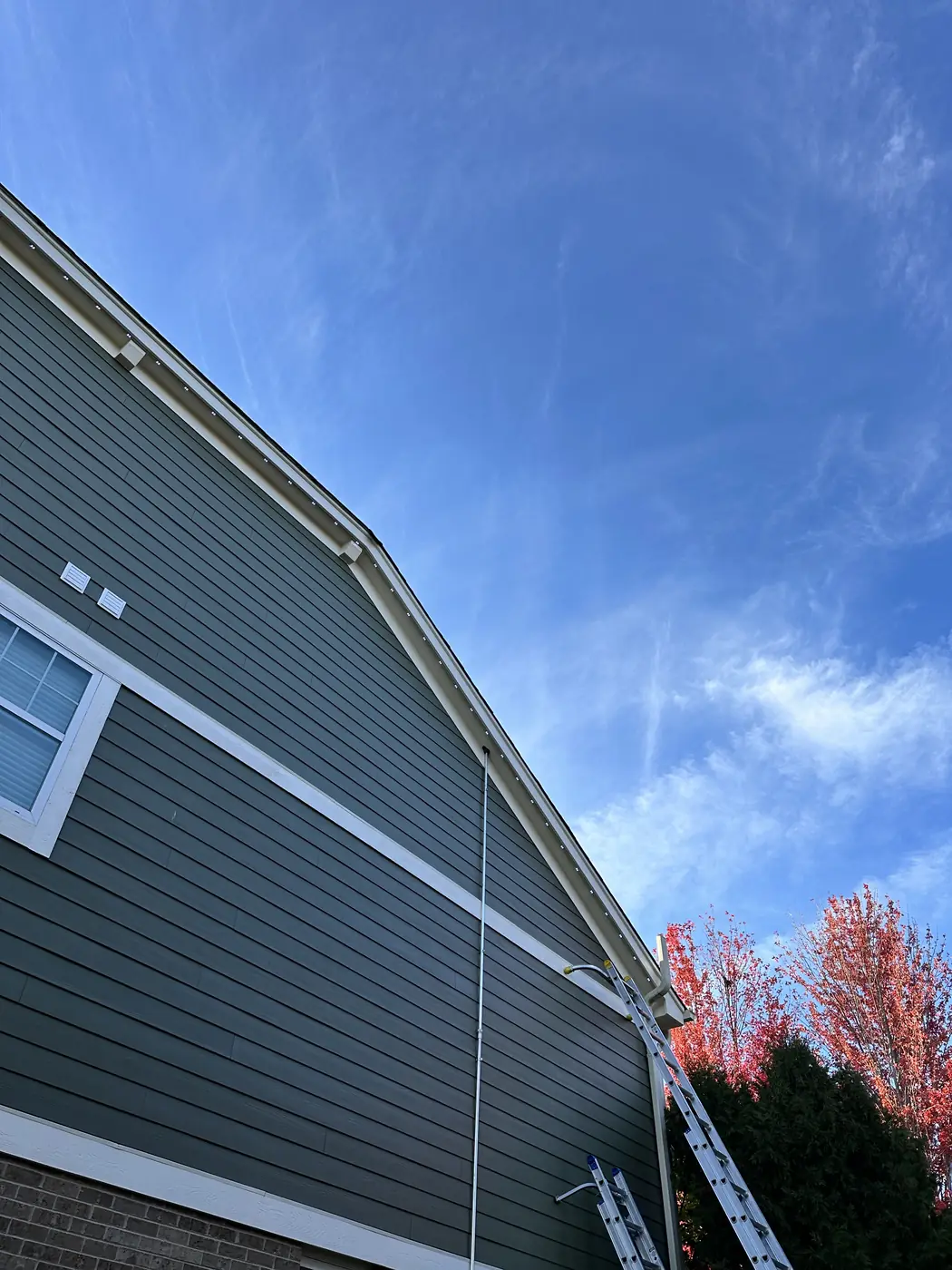
White track on white fascia against dark green siding. Mounted a few inches lower, the same track would have been a bright stripe.
If You’re Under an HOA
Treat approval as a first step, not a formality. Permanent lighting usually falls under the architectural rules in your CC&Rs rather than the holiday decoration clause, so it typically needs Architectural Review Committee approval before installation (Mulcahy Law Firm, October 31, 2025). That’s the part homeowners get wrong: a rule allowing seasonal lights from Thanksgiving to January is not a rule allowing something attached to the house year-round. Boards increasingly ask for static soft white outside the holidays and professional installation, which describes the system most people want anyway. A well-matched track and daytime photos make the application easy to approve.
The Trade You’re Actually Making
Daytime discretion is worth something because of what it buys you the other twelve hours.
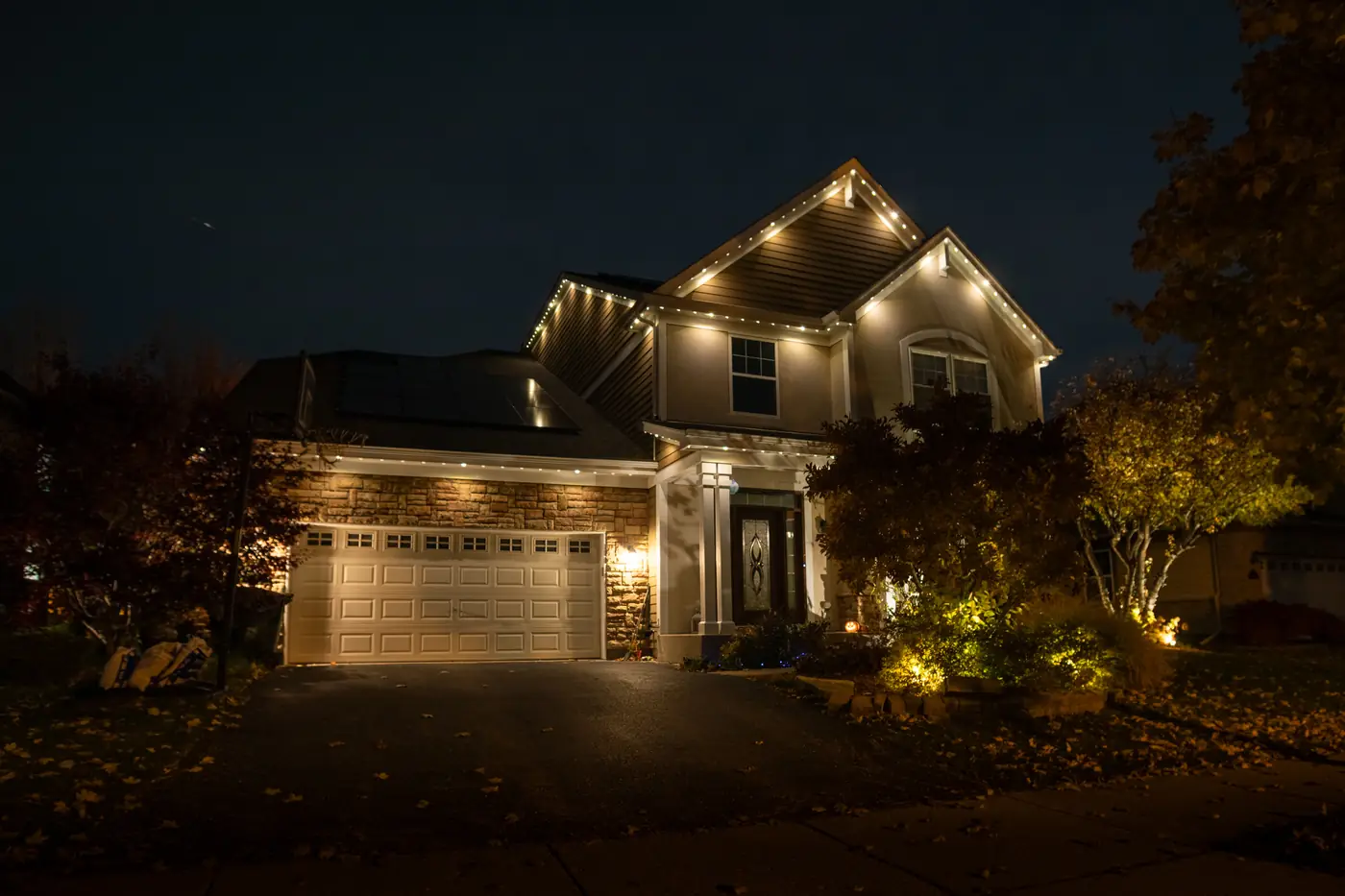
The same house at night, everyday warm white.
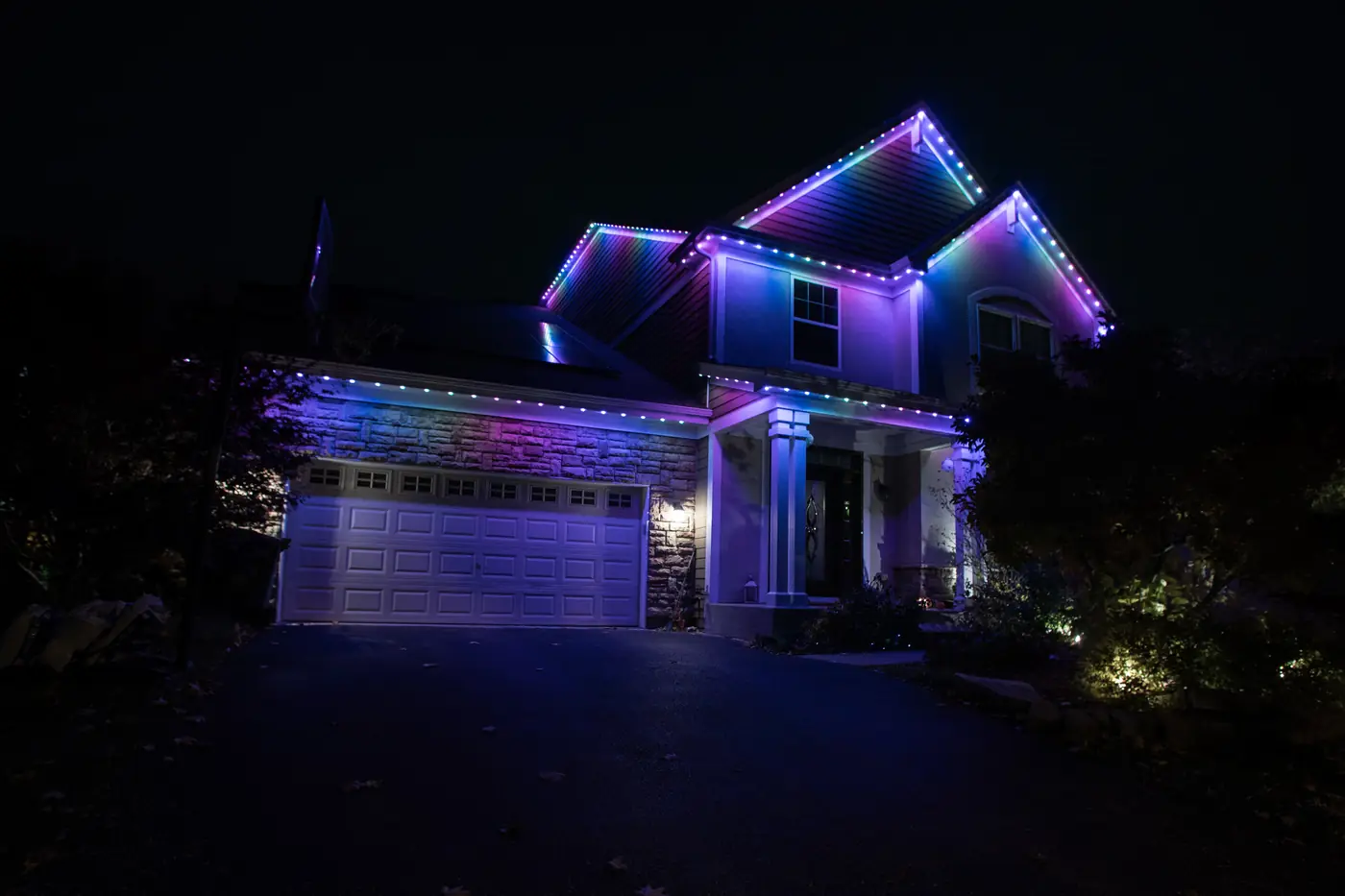
Same house, same angle, same hardware. Full color on demand.
That’s the whole argument for permanent lighting, and it only works if the daytime version is boring. A system that looks striking during the day has failed. For how the seasonal option compares on price, see our Chicagoland Christmas light installation cost breakdown.
What to Ask Before You Buy
Every installer will show you night photos. Night photos are easy. Ask for these instead.
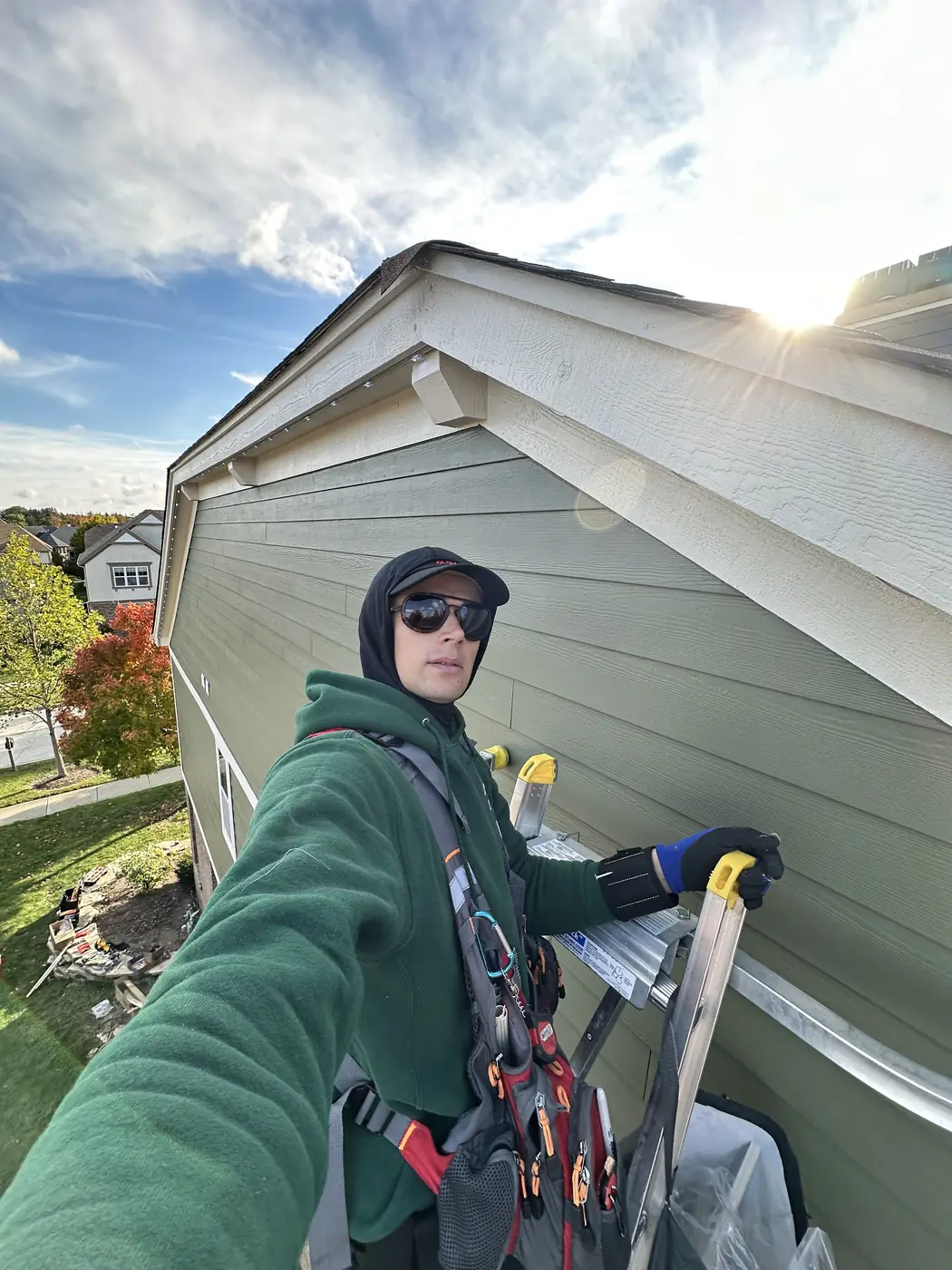
Every daytime detail on this list is decided while the ladder is still up.
What we’ve learned doing this
The two calls we never get are about the lights being too visible during the day. They’re about a line that isn’t straight, and a track color picked from a photo instead of held up against the house. Both are decided in the first hour of a job and permanent after that.
Frequently Asked Questions
Can you see permanent Christmas lights during the day?
Yes, if you look. You see a thin color-matched channel along the roof edge with small lenses in it. From the street it reads as trim. Standing under the eave you can count the individual bulbs.
What color should the track be?
Match it to the fascia or trim it mounts on, not the siding or the roof. Minleon’s track comes in black, white, brown, gray, and sand (product page). Picking from a photo instead of holding a sample against the house is the most common cause of a visible install.
Will permanent lights damage my fascia?
Mechanically fastened track puts screws into the fascia, the same as gutters and downspout brackets already do. What matters is whether the board is sound, whether the holes are sealed, and whether the installer knows what’s behind it.
Do I need HOA approval?
Usually yes, and before installation (Mulcahy Law Firm, October 2025). Bring product photos, daytime examples, and your track color to the application.
The Bottom Line
Permanent lighting is not invisible during the day, and any company that tells you it is has set you up to notice it on day two. It’s unobtrusive: a slim channel and a row of small lenses that read as trim from the street and only become obvious when you stand under the eave and look up.
Whether yours ends up unobtrusive or obvious comes down to four choices made on install day: track color, a straight line, fitted track, and how it’s fastened. Ask to see those in daylight photos before you sign anything, from us or anyone else. We’re based in Palatine and can price most homes from satellite roof measurements, and if you’d rather start seasonal, here’s why summer beats fall for installation.
Professional Permanent lighting
Ready to Transform Your Home's Exterior?
Get a free, no-pressure quote from Hanging Lights Club.
START MY PERMANENT LIGHTING